

Conversely, a negative WC might not mean the company is in poor shape if it has access to large amounts https://www.bookstime.com/ of financing to meet short-term obligations such as a line of credit. Both positive and negative changes in working capital will affect your business. This means it has a better ability to meet its short-term obligations, such as paying employees or suppliers or making loan repayments. The additional financial stability from a positive change in working capital can also give the company more funding for expansion efforts. To forecast working capital effectively, it’s essential to calculate the relationships of accounts receivables to sales, accounts payables to cost of goods sold, and inventory to sales or cost of goods sold. These ratios help link working capital to revenue projections, as working capital will likely vary with changes in sales and costs.
- However, this can strain relationships with suppliers, possibly leading to less favorable terms in the future.
- If your business is showing a negative change in net working capital, it’s time to investigate the cause.
- This is common and happens because the statement sometimes includes amounts from related parties or some other accounting technicality.
- Working capital and net working capital are both important financial metrics used by businesses to manage their short-term obligations.
- ” There are three main ways the liquidity of the company can be improved year over year.
Working Capital In Cash Flow Statement Example
- The negative changes in working capital tell us Hormel uses its current cash flow to grow the assets, either buying more inventory or extending its receivables to receive better pricing on its inventories.
- Working capital, often referred to as the lifeblood of a business, represents the funds available for day-to-day operations.
- You can obtain the non-cash working capital as a percent of revenues bylooking at the firm�s history or at industry standards.
- Stress testing models for downside scenarios, such as macroeconomic shocks, ensures robustness.
- Comparing these ratios to industry benchmarks ensures accurate projections and highlights areas needing improvement.
- A company's growth rate can affect its change in net working capital requirements.
In other words, in this case, the change in working capital corresponds to the impact on the cash flow statement. For example, if a company pays off a debt it has with a supplier, accounts payable will fall but so will cash. The change in working capital formula is simply the difference between the difference in current liabilities and assets from one year to the previous year. Still confused about the impact of working capital changes on the cash what are retained earnings flow statement? For example, let’s say you did a large order last month for $100,000, but you don’t have the money to pay for it until next month.
Additional Resources
Conceptually, working capital represents the financial resources necessary to meet day-to-day obligations and maintain the operational cycle of a company (i.e. reinvestment activity). If a company’s change in NWC increased year-over-year (YoY), a negative sign is placed in front to reflect that the company’s free cash flow (FCF) is reduced because more cash is tied up in operations. A variety of invoicing improvements can improve working capital and cash flow. Sending invoices quickly, sending payment reminders, shortening payment terms, and offering early payment discounts or late fees are a few strategies that business owners use to help reduce late payments. Some businesses also use invoice factoring, in which they sell outstanding invoices to a factoring company for cash.

Still tracking cash flow in spreadsheets? You’re bleeding capital.
It’s not to see whether there are more current assets than current liabilities. If you are a business owner, it makes no sense to constantly check whether you have more assets than liabilities on the balance sheet. It is important to realize that a failure to monitor changes in working capital can lead a business to run out of cash. For example, a growing business might be profitable but as it expands, the growth often leads to a substantial increase in inventory and accounts receivable without a corresponding increase in accounts payable. Subsequently without adequate working capital financing in place, this increase in net working capital can lead to the business overtrading and running out of cash.
These two last sentences are also the key to calculating owner earnings properly which I get to further below. However, the real reason any business needs working capital is to continue operating the business. Instead of an equation just telling you what working capital is, the real key is to understand what the change part means and how to interpret and use it when analyzing and valuing companies.
Inventory Management
On the other hand, an increase in a liability, such as accounts payable, means an expense was recorded for which there was no cash outflow. Positive working capital means the company has more current assets than current liabilities. This means the company can fully pay its bills and other obligations due in the next 12 months. Working capital is the amount of money a company has available to pay for day-to-day expenses such as raw materials and salaries. Changes in working capital can be a red flag, particularly for small businesses that cannot afford to wait for cash flow to even out.
HighRadius Named As A Major Player For Treasury & Risk Management Software By IDC
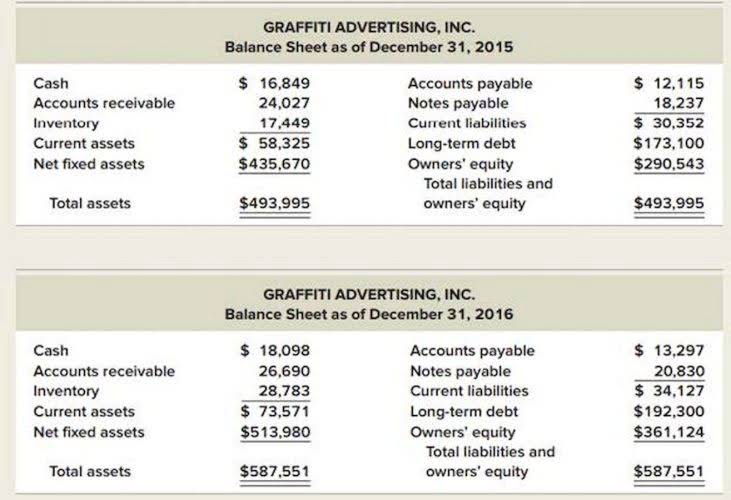
The concept of net working capital has been a foundational element in financial analysis and business strategy for centuries, evolving as businesses have become more complex and changes in net working capital the global economy has grown. It serves as a critical indicator of a company’s immediate financial health and operational efficiency. However, this can be confusing since not all current assets and liabilities are tied to operations. For example, items such as marketable securities and short-term debt are not tied to operations and are included in investing and financing activities instead.

How To Calculate Working Capital Balance Sheet Items and Calculation of Net Working Capital Change?
The formula to calculate working capital—at its simplest—equals the difference between current assets and current liabilities. In contrast, Company B, a tech startup, prioritized efficient accounts receivable management. This resulted in a decrease in working capital and a corresponding increase in free cash flow.
When customers take longer to pay their invoices, it increases accounts receivable. While this technically raises current assets, it can hurt cash flow because the money isn’t readily available for the business to use. This delay reduces the liquidity of your working capital, making it harder to cover immediate expenses. Accurately forecasting changes in working capital is crucial for creating reliable free cash flow projections. A precise understanding of how working capital will fluctuate directly impacts the accuracy of free cash flow predictions. Ignoring this aspect can lead to significant miscalculations and flawed financial planning.